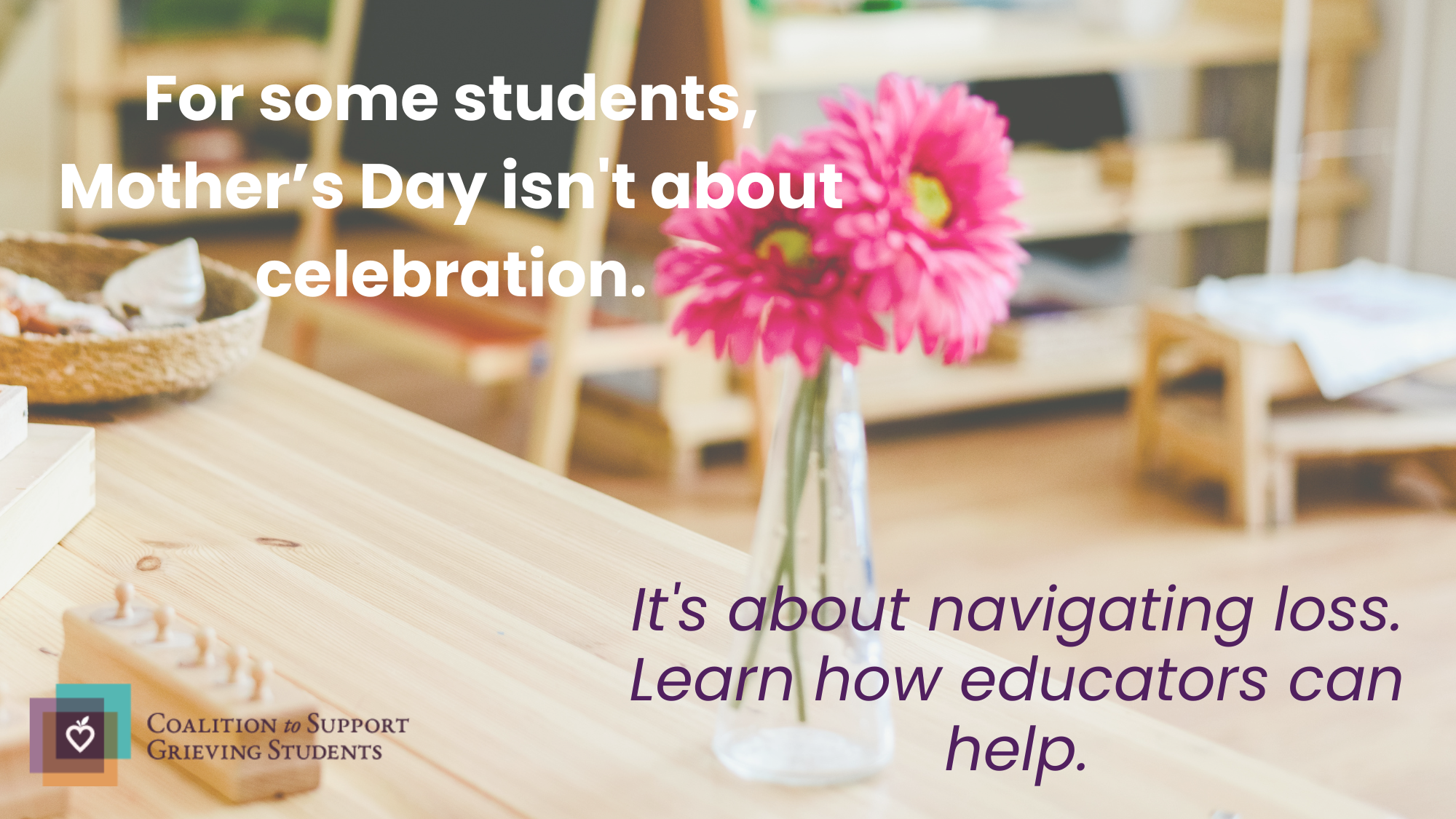
Mother’s Day is often one of the most heartfelt traditions in schools. Classrooms fill with art supplies, students write messages of love, and teachers guide children in celebrating the important role mothers play in their lives. For many students, it is a joyful and affirming experience.
But for a surprising number of children, Mother’s Day at school can feel very different.
In nearly every classroom, there are students living with loss, separation, or uncertainty. Some have experienced the death of their mother. Others live apart from her due to divorce, incarceration, military deployment, or circumstances that are difficult to explain. For some, a mother’s absence is not fully understood, only deeply felt. What is designed as a celebration can quietly become a reminder of what is missing.
The impact is not limited to the loss of a mother. Many students carry grief for other important figures in their lives such as grandmothers, aunts, neighbors, or caregivers who played a central role in raising them. Even students who have experienced the death of a father, sibling, or close family friend may feel the weight of how their family has changed when school activities center on family relationships.
These moments matter more than they may appear on the surface. A simple classroom activity can trigger feelings of confusion, sadness, or isolation, particularly when students feel they have no way to participate that reflects their reality. Without meaning to, schools can place children in the position of either explaining deeply personal circumstances or quietly withdrawing.
There are simple ways educators can make Mother’s Day more inclusive without losing its meaning. One of the most effective approaches is to broaden how the day is framed. Instead of focusing only on mothers, teachers can invite students to honor someone who cares for them or an important adult in their life. This small shift allows every child to participate in a way that feels genuine and safe.
Providing options also makes a meaningful difference. Some students may want to create something for a grandmother, a mentor, or another caregiver. Others may prefer to reflect privately. Offering flexibility communicates that all experiences are valid and respected.
When possible, a quiet check in ahead of time can help students who are known to be grieving. Letting them know what to expect and giving them a choice in how to participate can reduce anxiety and build trust. During the activity itself, educators can remain attentive to signs of discomfort and respond with sensitivity, offering alternatives without drawing attention.
These thoughtful adjustments extend beyond Mother’s Day. Any school activity tied to family or relationships, including Father’s Day, Valentine’s Day, or Thanksgiving, can raise similar challenges. Creating inclusive practices ensures that all students feel seen, regardless of their family structure or personal history.
Mother’s Day remains an important opportunity to recognize care, connection, and the role of supportive adults in a child’s life. With just a few intentional choices, schools can preserve the spirit of the day while making space for every student’s experience.
Educators looking for additional guidance can turn to The Coalition to Support Grieving Students, which offers free, school focused resources at grievingstudents.org. The site includes more than twenty video training modules, practical strategies, and downloadable materials designed to help teachers and school staff respond to grieving students and build supportive classroom environments.